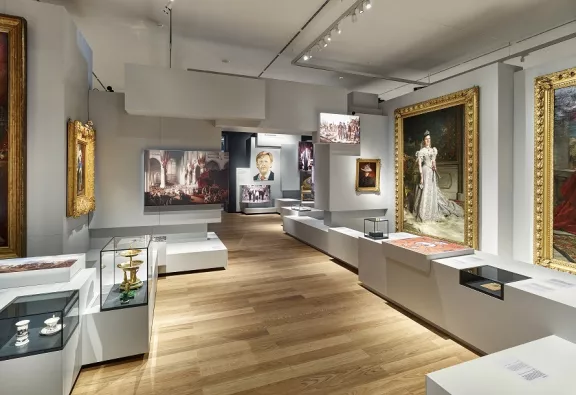
A new perspective on a colour with a history: what did white signify at court?
A new exhibition, White, More Than a Colour will open at Paleis Het Loo on Friday 9 October 2026. The exhibition explores the meaning of the colour white, from symbol of power to physical phenomenon, and from mourning to new beginnings. White, More Than a Colour will include Princess Beatrix’s wedding dress, with its long train, Queen Wilhelmina’s white hearse, the painting Het Witte Loo (‘The White Loo’) by Andreas Schelfhout and a painting about Isaac Newton’s prism experiment. Experts from a range of specialisms in science, culture, history, fashion and society reflect on the themes of the exhibition in short videos, as Paleis Het Loo invites visitors to take a new look at the colour white.
White is seldom neutral. It can appear immaculate and symbolise new beginnings, but it can also express exclusivity and power. White, More Than a Colour uses objects from the collections of Paleis Het Loo, the Royal Collections and others to show how this double meaning was reflected in court life over the course of three centuries, and the various perspectives this colour can be viewed from.
'There are a remarkable number of white objects in the collections at Paleis Het Loo and the Royal Collections. Whether it be the marble used in interiors, dresses worn by princesses, the ivory on a child’s pram or an ermine cloak – many royal items, clothing and interiors are white. That is why we decided to research the question of what it meant in the past, and what it means today.’
Based on research
Visitors enter through a filing cabinet, and the exhibition starts in the research room. From this central point, with projections, archive prints and an introductory film, visitors have access to four thematic rooms: the physics of white, exclusivity, the immaculate nature of white and new beginnings. Using light and materials, the exhibition first explains that white is not simply a colour, but an optical phenomenon, and then shows how for centuries this same colour expressed power and exclusivity at court. The focus then shifts to white as the colour of important moments in life: birth, marriage, final goodbyes. This section centres on three unique items: Wilhelmina’s christening gown, Princess Beatrix’s wedding dress and Queen Wilhelmina’s white hearse. White is not commonly worn as a colour of mourning, though it continues to feature at royal funerals today. It symbolises the life that follows a person’s earthly existence.
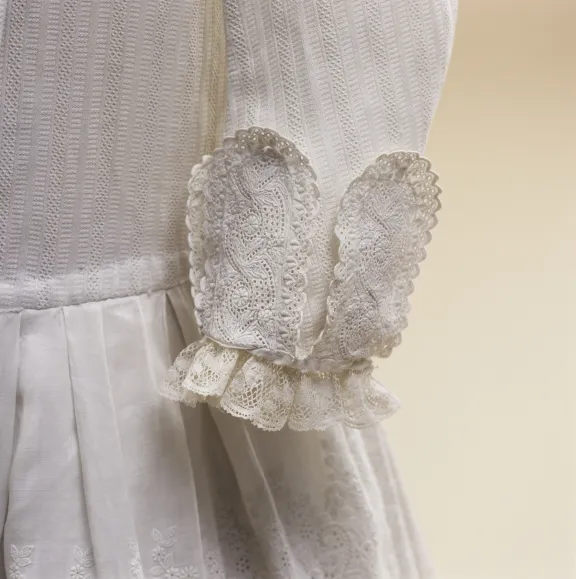
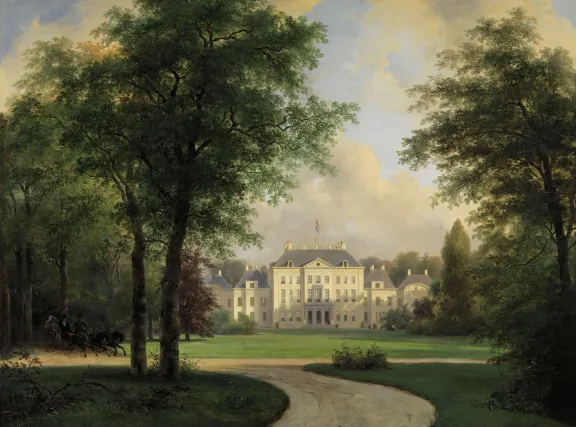
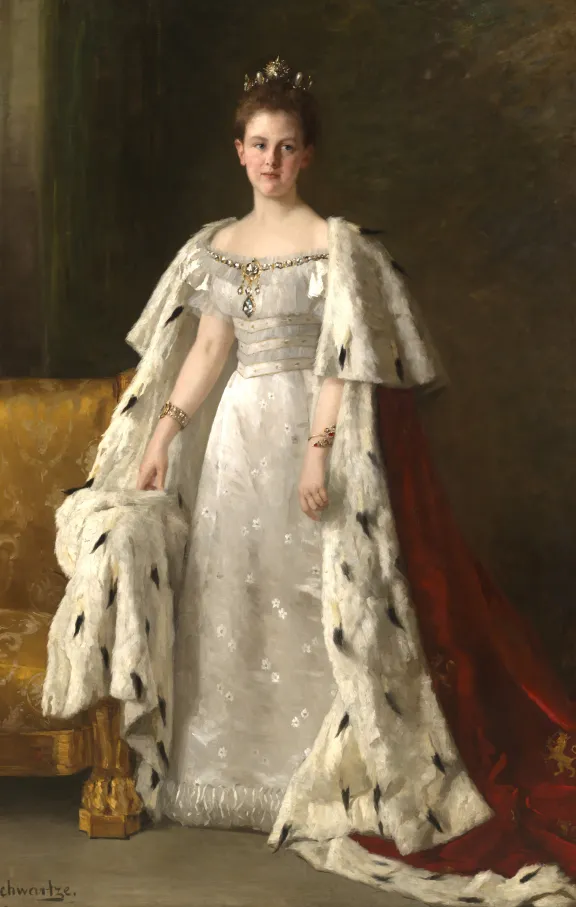
The painting 'Het Witte Loo' by Andreas Schelfhout shows Paleis Het Loo as it looked from 1806 to 1980, with white rendered exterior walls and an extra floor. White is still a prominent feature at the palace, in the stucco ceilings, marble walls and statues. The physical aspects of white are explored in the room on the theme of ‘the physics of white’. A painting depicting Newton’s prism experiment shows that white light is in fact made up of multiple colours. This same property, white as a reflector of light and heat, led Queen Wilhelmina to wear a white summer dress, while Princess Beatrix’s wedding dress, with its huge train, exemplifies the ceremonial role of white at court. The portrait of a deceased girl, probably Catharina Margaretha van Valkenburg, painted by Johannes Thopas in 1682 and on loan from the Mauritshuis, shows the 16th -and 17th-century practice of laying out deceased children in white, with white pillows and sheets.
White, More Than a Colour will be on show at Paleis Het Loo from 9 October 2026 to 7 March 2027.