“As your king and as a member of the government, I make this apology myself. And I feel the weight of the words in my heart and my soul”, said King Willem-Alexander on 1 July 2023, Slavery Remembrance Day.
As a museum, we are confronting the question of Paleis Het Loo’s associations with colonialism and slavery. It is addressed both in our permanent exhibits, and in our tours and online material. We are managing to uncover more and more information about objects in the collection that have colonial associations, and look forward to the results of the independent study on the Dutch royal family and colonialism, which the king has commissioned from Leiden University.
The ‘Featured: Colonial Cabinet’ presentation (from 12 October 2024) is the first exhibition devoted exclusively to colonialism and slavery in relation to Paleis Het Loo. It is intended both to prompt and to perpetuate discussions about colonialism, with visitors and internally among staff, as part of a long-term internal study.
Definition of colonialism
We use the term colonialism to refer to the occupation and exploitation of a region by another country, particularly European countries from the 16th century onwards. The main feature of colonialism was political domination and social and economic exploitation of the local population. Slavery was the trade in people who were forced to work on plantations, down mines and in households, as the property of another.
In the colonial era, such acts were committed by the Dutch East India Company (VOC) and West India Company (WIC). Slavery was abolished in the Netherlands in 1863. This did not however mean that all people immediately became equal. Racist ideas, inequality of opportunity and stereotyping continued to exist afterwards, and still have an impact to this day.
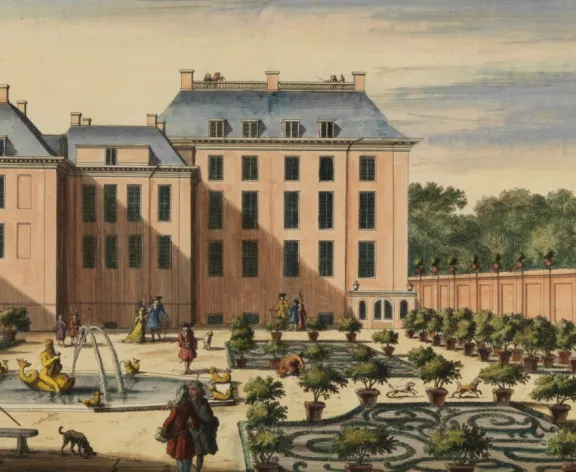
The link between colonialism and Paleis Het Loo began with the stadtholders. The VOC was established in 1602. It was the only trading company that had received permission from the Dutch state to sail to Asia, South Africa and the Middle East to trade, and it did not shrink from using violence. Such enterprises were huge trading companies whose focus was economic and military gain.
Personal interest
The House of Orange – the Dutch royal family – benefited personally from this trade. Previous research in the VOC accounts revealed that in the 18th century the stadtholder would receive one 33rd of the company’s profits. King-Stadtholder Willem III, for example, who built Paleis Het Loo, received 25,000 guilders in 1701, a hundred times the average annual salary at the time.
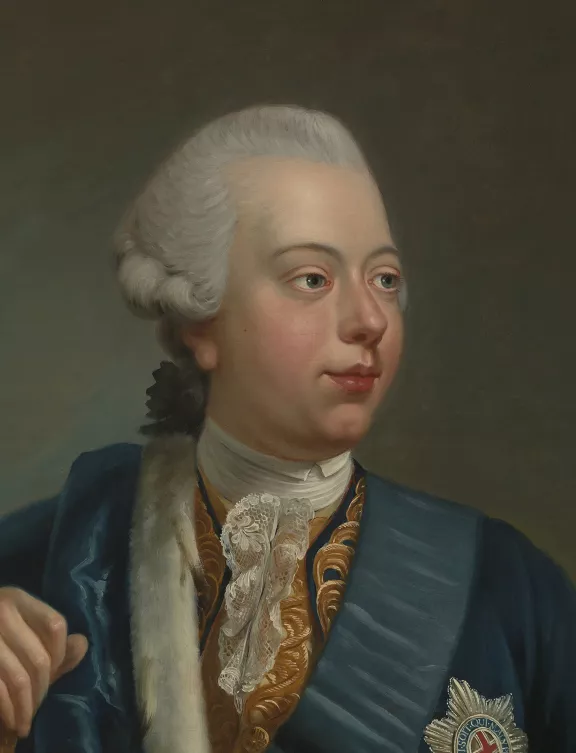
During the 18th century, Stadtholder Willem IV (1711-1751) and his successor Willem V (1747-1806) were both ‘opperbewindhebber’ (director-general) of the West India Company (WIC). The WIC was established in 1621, and traded in Brazil, Suriname, the Antilles and other places. As director-general Willem IV and Willem V could determine the company’s policy. In 1782 Willem V managed to persuade the States-General to send warships to Asia to protect the VOC’s commercial interests. Several years later he was involved in failed rescue attempts for both companies, and a range of administrative conflicts in the colonies. He also concerned himself with the question of how the Surinamese Maroons – enslaved people who had fled the plantations – could be brought back.


For centuries, the House of Orange was the face of power in the Netherlands. They were thus closely interwoven with the country’s colonial past, which included political and economic oppression, slavery and typical colonial attitudes. The opulence of the palace is, for example, associated with the global trade conducted by the United East India Company and West India Company, the VOC and WIC. Paleis Het Loo’s collection contains traces of colonialism which we continue to investigate. This cassone (Italian sideboard) or wedding chest is one example.
Searching for words
Slavery and colonialism are a thing of the past in the Netherlands. But we do not know everything there is to know about them, and the information we do have is not known widely enough. Society is changing, and the continued use of language with colonial connotations can cause pain and anger.
In creating this exhibition, therefore, Paleis Het Loo sought words that would do justice to the colonial past. What words do the descendants of enslaved people use? How do academics write about it? Things continue to change, and the language we use today may not be appropriate tomorrow.
Language affects us all, and it can exclude people – whether deliberately or accidentally. A new age requires new words.
The ‘new’ language means taking care not to exclude anyone, and not repeating terms that reaffirm old power relationships. We therefore refer to ‘enslaved people’ (with the emphasis on the way they were treated) rather than ‘slave’ (where the emphasis is on ownership).