
The life of German banker and collector Herbert M. Gutmann (1879-1942) and his family takes a tragic turn with the rise of the Nazis. He loses his home, accumulated fortune and art collection. The descendants of Herbert M. Gutmann are trying to get a clear picture of the fates of their grandfather and his family. For years, they have been working to track down and reclaim artifacts from his collection.
Forced by the Nazis, Gutmann has to have his possessions auctioned off. Years later, sixteen plates and two sauce boats from his collection end up in Dutch museum collections. These pieces are all part of a Meissen service with town and village scenes of Holland and Java, which originates from the estate of Stadholder William V and once consisted of about 435 pieces in total. Gutmann's grandchildren file an application for restitution with the State of the Netherlands in 2014 to recover the dinner service pieces. On the advice of the restitution committee in 2019, the minister of Education, Culture and Science decides to return the objects to the family. In 2024 Paleis Het Loo acquires all of the restituted dinnerware pieces from the heirs, except for one platter that is acquired by the Rijksmuseum. In doing so part of the story of looted art can be told in the Netherlands through our museum collections.

Herbert M. Gutmann
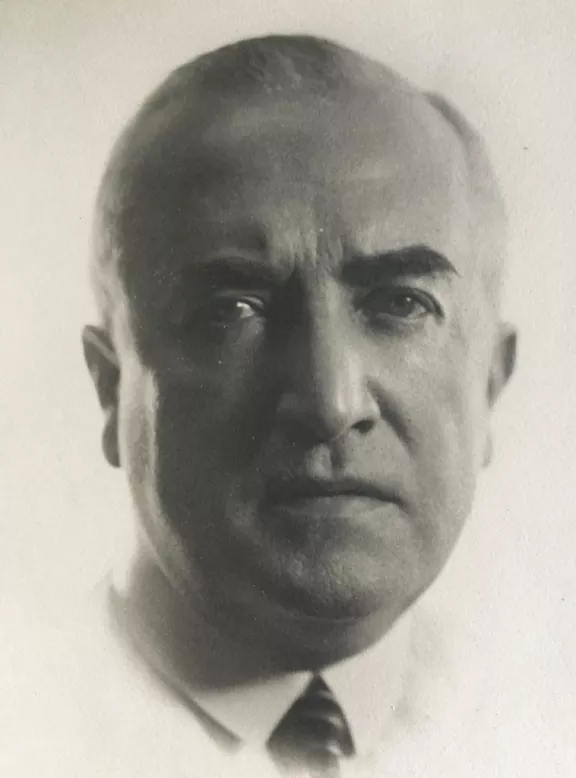
Herbert M. Gutmann is born on October 15, 1879, in Dresden, the son of Eugen Gutmann (1840-1925) and his wife Sophie Magnus. His father establishes the Dresdner Bank AG in Dresden in 1872. Both the bank's headquarters and the family move to Berlin in 1884. There Eugen and his children convert from Judaism to Protestantism. When Herbert M. Gutmann is seventeen years old, he begins his training in banking at the Dresdner Bank. After several years of experience, he becomes vice president of the London branch. In 1906, father and son jointly establish the Deutsche Orientbank AG in Istanbul. In addition, Herbert joins the board of directors of the Dresdner Bank and becomes responsible for the bank's extensive foreign affairs. During this period he builds up his art collection, partly during his travels throughout Europe and the Middle East.
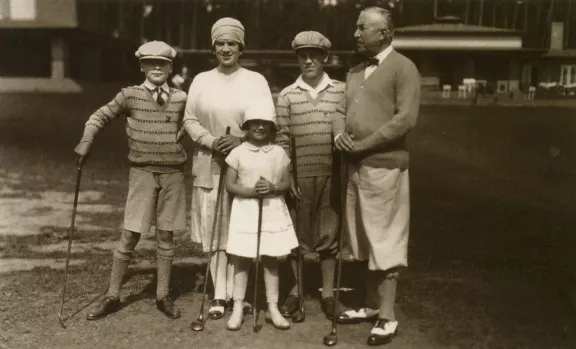
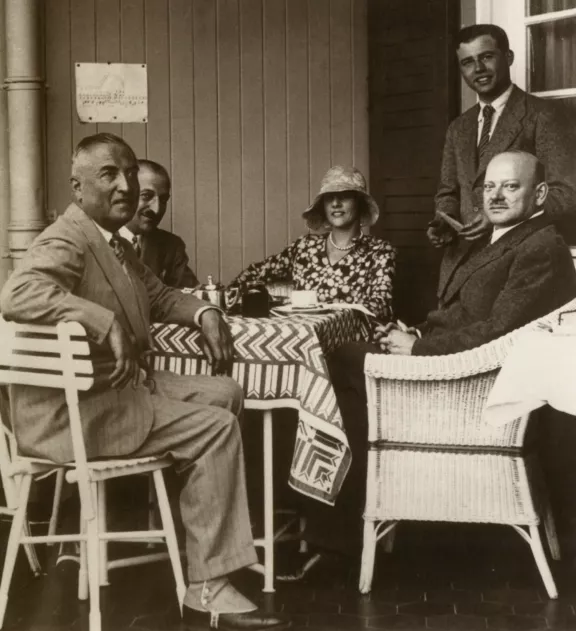
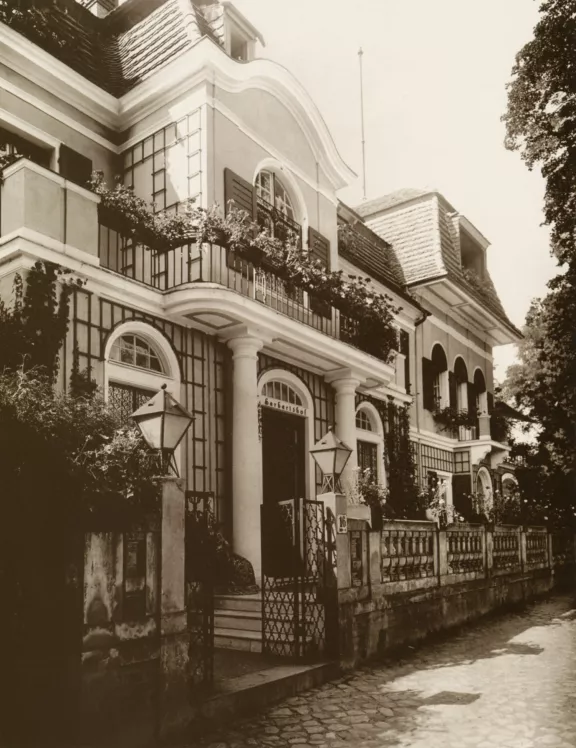
Herbert marries Daisy von Frankenberg und Ludwigsdorf (1889-1959) in 1913. They have three children: Luca, Fred and Marion. The family alternately lives in Berlin and Potsdam. After some time they choose a permanent home in Potsdam and call it the “Herbertshof”. The art collection, consisting of Dutch landscape painters, French and German rococo paintings, porcelain and other antiques, is also given a place here. Herbert has a great love for Asian art and collects Persian, Arabic, Ottoman and Chinese ceramics. The Gutmanns are among the most popular couples in the bustling Berlin of the 1920s. Their home “Herbertshof” grows into an internationally renowned meeting place for politicians, royalty, athletes, scientists, and artists. In 1931, the Dresdner Bank suffers in the banking crisis, which results in nationalization of the majority of shares. Herbert M. Gutmann has to leave the board of the bank but is promised to get a seat at its advisory board. He also maintains his other functions for the bank.
Nazi terror
The lives of the family take a tragic turn with the rise of the National Socialists in 1933. The Dresdner Bank is “co-ordinated” with the National Socialists policy. Herbert M. Gutmann has to withdraw from advisory boards and associations because of his Jewish descent. The Dresdner Bank demands that he use his own cash to repay debts that had long since been written off. Gutmann offers to raise money with the “Herberthof” as collateral. When this is refused, he is forced to have his art collection auctioned off at Paul Graupe in Berlin in April 1934. In June 1934 he was briefly detained by the Gestapo. In 1936, Gutmann flees to England with his wife and daughter Marion. His son Luca is interned as an ‘enemy alien’ and son Fred emigrates to the United States and during World War II serves in the US Airforce. Despite his departure from Germany, Gutmann is forced to sell the “Herbertshof” to a Nazi organization in 1939. A few years later, the Gestapo revokes his and his family’s German citizenship and confiscates his remaining properties in Berlin and Potsdam.
Final years
Gutmann becomes seriously ill and the family has to make ends meet on what little money is left. He dies impoverished in 1942. Despite everything, Herbert always has uplifting words for others. For example, in a letter to his son, he writes:
“Money lost, nothing lost. Sense of humour lost, everything lost”.
When Germany occupies France and the Netherlands, Gutmann's siblings are also in danger and have to flee. His brother Max and his sister Lili survive the war in Italy, his sister Rosalie in Sweden and his brother Curt goes into hiding in German-occupied France. Herbert's youngest brother Friedrich “Fritz” Gutmann lives in Holland, and is trapped there after the German invasion. He tries to preserve his and his father Eugen's art collection. This costs him his life: in 1944 Fritz is murdered in Theresienstadt concentration camp. His wife is transported to Auschwitz where she too is murdered.
Gutmann’s heirs want today’s public to see these beautiful plates as the bearers of memory of terrible past events and their restitution as a symbolic token of redress and recovery.