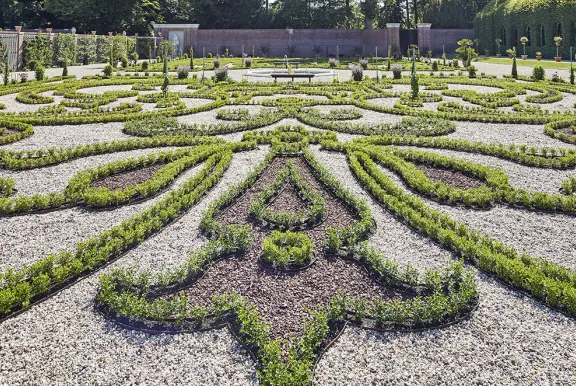
State of Wander: Towards Environmental Restoration
Developed through sustained research into the palace’s collection, architecture, gardens and ecological histories, the exhibition brings together newly commissioned, site-responsive works installed throughout the palace interiors, stables, gardens, grotto, rooftop and surrounding woodland. Since 2024, 10 national and international artists, designers and academics have collaborated with researchers and institutional departments to examine how royal heritage intersects with environmental decline, colonial trade, systems of governance and multispecies coexistence.
State of Wander is a research-based, cross-disciplinary contemporary art project initiated and conceived by guest curator Anna Bitkina and developed in collaboration with Annette de Vries, Associate Director of Research, Collection and Programming at Paleis Het Loo. The exhibition reflects on how historical displays of nature and designed environments shape contemporary thinking about ecological systems, inviting audiences to rethink human relationships with the natural world, history and cultural heritage.
“Cultural heritage requires thinking in long lines: past, present and future. Contemporary art plays an important role at Paleis Het Loo. State of Wander offers fresh perspectives on heritage and invites wandering — inside, outside and in thought.”
Over more than a year of collective research, 10 commissioned projects emerged specifically for display across internal and external palace spaces — including gardens, the grotto, the rooftop and woodland — the aim is to prompt visitors to wander, pause, reflect and engage with planetary cycles, organisation of human life and species interdependency.
Highlights include a series of site-responsive works that explore salt crystallisation as transformation, augmented-reality narratives addressing colonial histories, ecological soundscapes, and scent installations that challenge hunting as a part of human activity.
“With its scale and expansive display, the exhibition will challenge visitors to embark on a kind of expedition. Equipped with a roadmap (exhibition booklet) they will go on a trip through Paleis Het Loo estate to explore how collections of royal houses and Western museums have shaped our understanding of nature. They will trace how deeply rooted ideas of human dominance, embedded in cultural and educational institutions, continue to inform the way we relate to the natural world today.”

The artists, designers and academics proposals
Antye Guenther - Salt of Interest East German–Dutch artist Antye Guenther presents a ceramic installation in Queen Mary’s Cellar Kitchen. Responding to salt damage in historic tiles, Guenther cultivates salt crystals on historical tiles , linking conservation processes to climate instability. The growing formations suggest a privileged royal refuge slowly reclaimed by ecological forces, reframing deterioration as transformation.
Bryony Dunne – Tables of Power Irish artist Bryony Dunne stages sugar sculptures in the former royal dining room and chapel. Referencing courtly sugar table displays and the violence embedded in colonial extraction, miniature animals are arranged as strategic territories. A filmed performance activates the installation, exposing how systems of authority and governance are rehearsed through ritualized control of the natural world.
Caitlin Berrigan – 1,311 Diamonds Caitlin Berrigan presents a sculptural and sound installation in the East Foyer. Drawing connections between the palace’s marble (formed by sea life), maritime commerce, and the Atlantic slave trade, the work repositions the ocean as a site of extraction, memory, and collective breath. Indigo textiles, shells and sound recordings form a multisensory meditation on climate crisis and systemic inequity.
Clemens Driessen en Teodora Cecilia Buccilli – Unboxing the Sovereign Gaze Philosopher Clemens Driessen and architectural researcher Teodora Cecilia Buccilli install a perspective box on the palace rooftop. Revisiting 17th-century European garden design, the work interrogates how single-point perspective constructs authority, shaping both historical landscape design and contemporary human–nature hierarchies.
Edward Clydesdale Thomson – home/host Scottish-Dutch artist Edward Clydesdale Thomson presents an animatronic sculpture in the museum courtyard. Integrating real-time data from palace departments, the installation treats the palace as a sensing body, revealing how thresholds of inclusion, exclusion and hospitality are encoded within institutional systems.
Gayatri Kodikal – Searching for Lost Seeds Gayatri Kodikal creates a GPS-sensitive augmented reality narrative spanning palace rooms, gardens, stables and hunting grounds. Combining textile works, video and virtual objects, the project interrogates colonial material histories and Western constructions of “wildness,” exposing how landscapes were shaped for leisure, display and control.
Jan Christian Schulz – Biophony of Het Loo German designer Jan Christian Schulz transforms the Shell Grotto through a live broadcast of outdoor ecological sound captured via environmental sensors. The installation replaces historical captivity with real-time listening, foregrounding living ecosystems over preserved specimens.
Marianna Maruyama – Diana Marianna Maruyama reintroduces the Roman goddess Diana through two custom perfumes installed in Bernhard’s room and the Grand Foyer. Scent becomes a narrative device, exposing the palace’s hunting legacy while inviting visitors to carry an embodied memory of the site.
Rob Voerman – W Arnhem-based artist Rob Voerman constructs a recycled-material pavilion in the Upper Garden. Referencing vernacular sod houses and alternative economic systems, the structure contrasts sharply with the baroque landscape, underscoring inequalities in access to land, housing and resources.
Terike Haapoja – Foreign Beasts and Other Rarities Berlin-based artist Terike Haapoja contributes an alternative audio tour available through the museum app and a multichannel video installation. Shifting away from individual royal biography, the work foregrounds plants, animals and multispecies perspectives shaped by colonial trade and capitalist expansion.
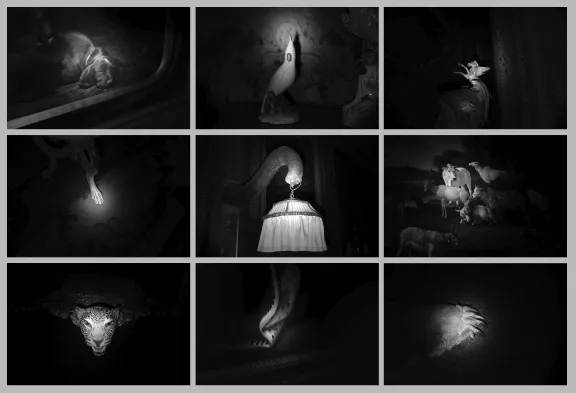
Exhibition Framework
Installed across interiors, gardens, woodland, rooftop and subterranean spaces, the exhibition proposes heritage as a living ecological archive. Rather than stabilizing history, State of Wander situates the palace within ongoing planetary processes, asking how institutions might participate in environmental restoration rather than simply represent it.
State of Wander: Towards Environmental Restoration
17 April - 27 September 2026
Paleis Het Loo
Koninklijk Park 16, Apeldoorn, Netherlands