Dutch royal palace that feels like home
Paleis Het Loo serves as the Dutch royal palace for three centuries. Built in 1684, it is a masterpiece of 17th-century Dutch Baroque style. A distinctly Dutch palace with characteristic symmetry, restrained grandeur and modest proportions, it was designed to be lived in. This Dutch royal palace has been filled with life for more than 300 years.
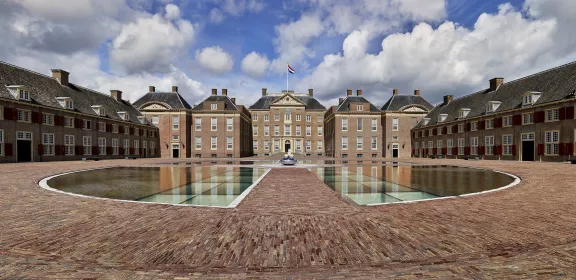
Dutch royal life for three centuries
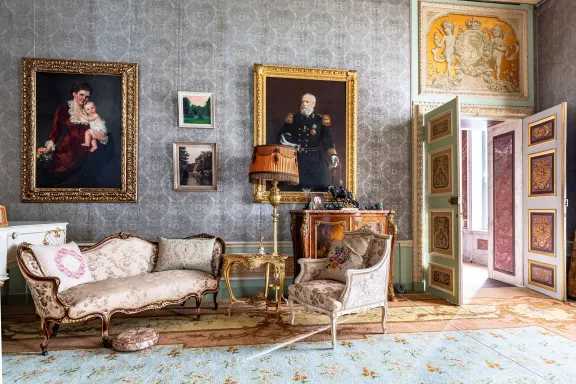
Generations of Dutch royals lived and worked at Paleis Het Loo as the summer residence of the royal family. They each left their mark on this Dutch royal palace. As a museum since 1984, Paleis Het Loo brings history to life in every room, garden and exhibition. As you move through the palace, Dutch history comes alive. With original interiors and furnishings, everything you see is authentic and true to life.
For anyone wondering where the Dutch royal family lived, Paleis Het Loo provides a fascinating insight into royal life through the centuries. Today, the palace remains one of the best-preserved royal residences in the country. This Dutch royal palace continues to tell stories of kings, queens and generations of royal residents.
A location fit for a Dutch royal palace
Stadtholder-King Willem III and Princess Mary II Stuart had Paleis Het Loo built in 1684. It was a dream location in the heart of the Veluwe forest and perfect for creating magnificent gardens. Thanks to water flowing from higher sources, impressive fountains could be constructed around the palace.
In 1689, Willem and Mary became King and Queen of England, Scotland and Ireland. They expanded Paleis Het Loo from a modest summer residence into a true Dutch royal palace. Because a sovereign was expected to reside in the country where they reigned, Queen Mary remained in England. She never saw her beloved palace again and died in 1694 at the age of 32. Her influence can still be recognized throughout this Dutch royal palace.
French wreak havoc at royal place Netherlands
Paleis Het Loo remained the summer residence after Willem and Mary. Catastrophe struck in 1795 when the French invaded the Netherlands and Stadtholder Willem V and his family fled. French soldiers plundered the palace and many valuable possessions disappeared.
In 1806, Lodewijk Napoleon, appointed King of the Netherlands by his brother Napoleon Bonaparte, moved into the palace. During this period, the Dutch royal palace underwent several changes. When Lodewijk left in 1810, the palace once again became home to the Dutch royal family and regained its place as a leading Dutch royal palace.
The Dutch royal palace: A place to call home
In the years that followed, Paleis Het Loo became home to generations of Dutch royals. Princess Margriet and her family lived here from 1967 to 1977. Although they were the last residents, the palace remains closely connected to the royal family. Following a major renovation, the palace reopened in 2023. At the palace's reopening, King Willem-Alexander said: “It feels like coming home.”